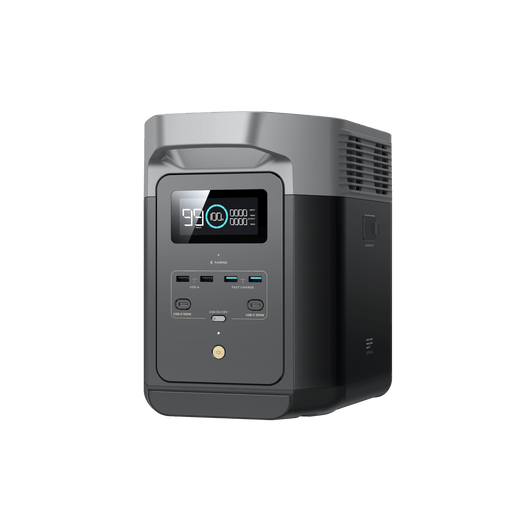
EcoFlow DELTA 2

EcoFlow

EcoFlow DELTA 2

1024 Wh LiFePO4 portable power station with 1800 W pure-sine AC output (2700 W surge), six AC outlets, 1200 W fast wall charging, modular battery expansion, and a 3000-cycle (to 80 %) battery rating.

$1,299 CAD

MSRP — current vendor price may differ

Specifications

USB A
2 × 12 W + 2 × 18 W (Quick Charge)
USB C
2 × 100 W
Dc5521
2 × 12.6 V / 38 W
Ups Mode
EPS only (not 0 ms UPS-grade)
Weight Kg
12
Weight Lb
27
AC Outlets
6 (120 V / 50-60 Hz, pure sine)
Cycle Life
3000 cycles to 80 % capacity
DC Carport
1 × 12.6 V / 10 A (126 W)
Capacity Wh
1024
Charge Temp C
0 to 45
Dimensions In
15.7 × 8.3 × 11.1
Dimensions Mm
400 × 211 × 281
AC Input max W
1200
Storage Temp C
-10 to 45 (optimal 20 to 30)
Warranty Years
5
Discharge Temp C
-10 to 45
AC Output Surge W
2700
Battery Chemistry
LiFePO4
Battery Voltage V
51.2
Solar Input max W
500
Expandable Battery
yes (Smart Extra Battery, sold separately)
Wifi Bluetooth App
yes (EcoFlow app)
AC Output X Boost W
2200
Solar Input Voltage V
11 to 60
AC Output Continuous W
1800
AC Charge Time To 80 Minutes
50

What it is

The DELTA 2 is EcoFlow’s mid-size portable power station: a 1024 Wh LiFePO4 battery paired with a 1800 W pure-sine inverter (2700 W surge), six AC outlets, 1200 W AC wall charging, and a 12 kg form factor with an integrated handle. Sits between EcoFlow’s RIVER series and the larger DELTA 2 Max and DELTA Pro.

The “DELTA 2” generation moved EcoFlow’s mid-class to LiFePO4 chemistry — the practical difference between a battery rated for a few hundred cycles and one rated for 3000 cycles to 80 % capacity, which is a working lifespan measured in years rather than seasons.

Where it fits

A 1024 Wh battery covers typical cottage-weekend loads — phone and laptop charging, LED lighting, intermittent fridge cycling, a CPAP overnight — for roughly a day before recharging. The 1800 W AC ceiling (with X-Boost virtual extension to 2200 W) means it can handle higher-draw devices like a coffee maker, microwave (briefly), corded power tools, or a hair dryer — broader real-world device support than 1500 W-class competitors.

Six AC outlets is unusual for the size class and matters when the unit is the central power source for a cabin or work site — you can run a fridge, phone charger brick, fan, a lamp, a laptop charger, and a tool charger all at once without needing a power strip.

Modular expandability via the Smart Extra Battery is a real differentiator: the same unit you buy today can grow to 2048 Wh or 3072 Wh later by plugging in additional batteries. For buyers who expect their power needs to grow — moving from cottage weekends to longer off-grid trips, for example — this avoids replacing the whole unit.

Where it doesn’t

  • Continuous off-grid living. 500 W solar input gives a full recharge in roughly 3-6 hours under good sun, suitable for off-grid weekends. Not enough for indefinite continuous off-grid use without additional generation capacity.
  • 0 ms UPS workloads. EcoFlow explicitly states the DELTA 2’s EPS (Emergency Power Supply) mode is not 0 ms switching and should not be connected to data servers, workstations, or other equipment that requires uninterrupted UPS-grade transitions. For desktop computers and most fridges the EPS switch is fast enough; for anything you cannot let glitch off momentarily, a true online UPS is required.
  • Cold-weather charging. Charge temperature range is 0 °C and above. Discharge works down to -10 °C, but charging below freezing is not supported and matters for winter cottage and ice-fishing use — plan to keep the unit inside the cabin or vehicle while it charges.
  • High-draw appliances for extended runs. A microwave or hair dryer pulls the full 1800 W budget; the 1024 Wh battery sustains that for under an hour.
  • No NRTL safety mark on EcoFlow’s published material. The Canadian product page and the user manual document FCC Part 15 Class A compliance (US emissions standard) but do not state CSA, cULus, cETL, UL, or any other Canadian-recognized NRTL safety mark. EcoFlow sells the unit through their Canadian storefront, but absence of an explicitly stated Canadian safety mark can matter for some buyers — particularly anyone whose insurance or rental terms ask about certified electrical equipment. Confirm with EcoFlow directly before purchase if certification is important to your use case.

Full specifications

Spec Value
Battery capacity 1024 Wh (51.2 V)
Battery chemistry LiFePO4
Cycle life 3000 cycles to 80 % capacity
AC output (continuous) 1800 W pure sine wave
AC output (surge) 2700 W
AC output (X-Boost virtual) up to 2200 W
AC outlets 6 × 120 V / 50–60 Hz
USB-A 2 × 12 W + 2 × 18 W Quick Charge
USB-C 2 × 100 W
12 V DC carport 1 × 12.6 V / 10 A (126 W)
DC5521 output 2 × 12.6 V / 38 W
AC input (max) 1200 W (X-Stream, 100–120 V / 50–60 Hz, 10 A)
AC wall charge (0–80 %) 50 minutes
Solar input (max) 500 W (11–60 V, 15 A)
WiFi / Bluetooth / app Yes (EcoFlow app)
Backup mode EPS (not 0 ms UPS)
Optimal operating temperature 20 °C to 30 °C
Charge temperature 0 °C to 45 °C
Discharge / storage temperature -10 °C to 45 °C
Weight 12 kg (27 lb)
Dimensions 400 × 211 × 281 mm (15.7 × 8.3 × 11.1 in)
Modular expansion Smart Extra Battery, sold separately
Warranty 5 years

Practical considerations

  • Cottage / cabin use. The 5-year warranty is unusually long for portable power. The six AC outlets reduce the need to run a power strip off a single output, which matters when the unit doubles as the cabin’s main mains source.
  • RV use. 1800 W continuous covers most non-rooftop-AC RV loads. Rooftop air conditioners typically need 1800 W+ continuous plus higher surge headroom; verify your specific unit before relying on the DELTA 2 for that.
  • Emergency / outage prep. 50-minute 0–80 % charging is meaningful when a storm warning hits and you want a top-up before grid power drops. EPS switchover keeps a fridge or modem running through brief outages, but is not safe for servers or other 0-ms-required gear.
  • Solar pairing. 500 W max input means a recharge from solar takes ~3-6 hours under good conditions. Useful for off-grid weekends; not enough for continuous off-grid living.
  • Expandability. If you start with the standalone unit and later add a Smart Extra Battery, total usable capacity scales without replacing the inverter.

Pricing

MSRP at time of writing: $1,299 CAD direct from EcoFlow Canada. EcoFlow runs frequent seasonal promotions on the DELTA series, so the live price below may be lower than the MSRP shown above.

Voltery

A site about consumer electrical gear, written for a Canadian audience.

Affiliate disclosure: Voltery earns a commission when you click outbound product links and make a purchase. The price you pay is not affected. We do not accept paid placements.

© 2026 Voltery.